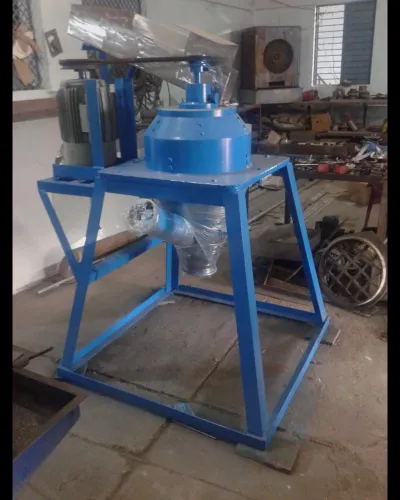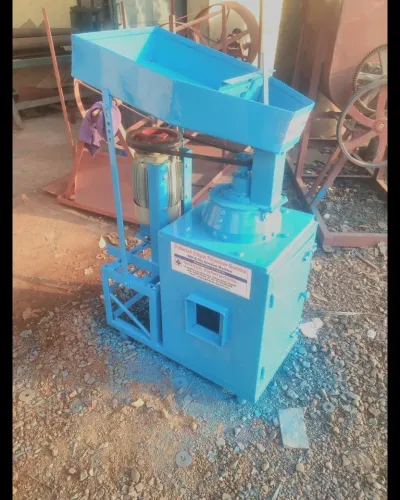
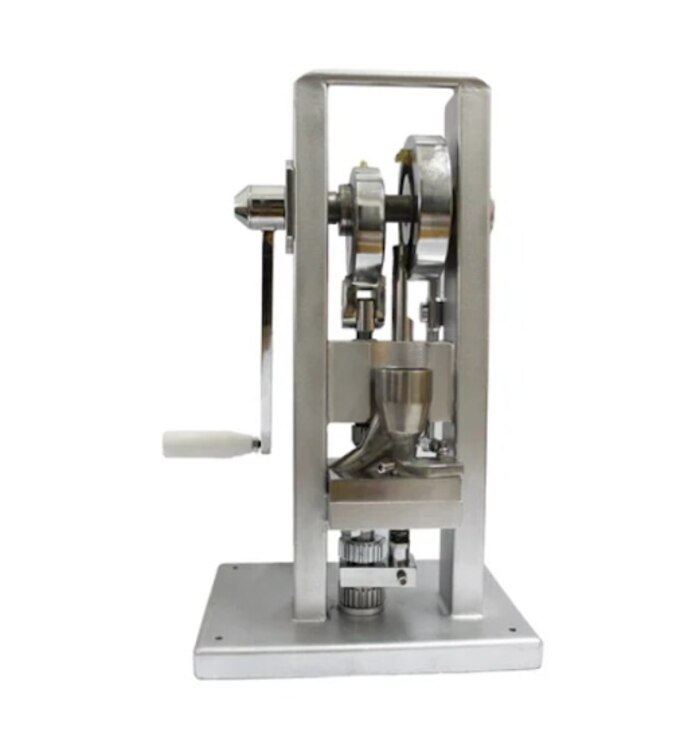
A quoted production rate tells you little until you define the camphor tablet, formulation and saleable output you need. By checking the feed system, tooling, compression performance, safety controls, cleaning time and supplier support, you can compare machines on sustained production rather than brochure speed.
Key takeaways
- Define tablet diameter, thickness, weight, shape and formulation first.
- Calculate saleable output after rejects, stoppages, cleaning and changeovers.
- Inspect tooling, compression consistency and powder-feed control before buying.
- Demand a documented trial using your formulation and target tablet specification.
Define the Camphor Tablet Before Comparing Machines
Specify the finished tablet before comparing a kapoor making machine. A camphor tablet machine must accept your required tablet diameter and thickness, weight, shape and production formulation, not merely produce a similar-looking tablet.
1. Record the target tablet diameter, thickness and weight, then define acceptable weight variation. Set a hardness range and friability limit that survive packing, transport and handling. Ask which punch-and-die sets are available and whether thickness and fill depth can be adjusted without replacing the entire tooling set.
2. State the intended use. A household or ritual camphor tablet has a different control burden from a regulated medicinal product. For medicinal manufacture, require documented cleaning procedures, equipment-cleaning records, in-process controls and change-control support; U.S. 21 CFR 211.67 covers cleaning and maintenance, while 21 CFR 211.110 covers in-process controls and testing.
3. Give the supplier the actual camphor powder specification: particle-size distribution, moisture level, flow behaviour, bulk density, binder or additive content and any granulation step. Confirm that the feeder can charge, meter and compress this blend consistently; powder that bridges in the hopper produces weight variation and soft tablets.
4. Treat camphor powder as a possible combustible-dust hazard at charging, feeding, dedusting and collection points. Obtain explosibility data for the actual blend before selecting dust collectors, venting, suppression and electrical equipment. Also request product-contact material grades, weld finishes, seals, compatible cleaning agents, lubricant segregation and a complete contact-parts list; “stainless steel” alone proves little.
Calculate Saleable Output, Not the Quoted Maximum
A quoted 500 kg/day figure is not a production plan. Convert tablet rate into saleable kilograms using the target tablet weight, then subtract every hour and tablet that will not reach the customer.
- Calculate theoretical tablets per hour: stations × press revolutions per minute × one tablet per station × 60.
- Convert tablets to weight: tablets per hour × tablet weight in grams ÷ 1,000.
- Multiply by scheduled running hours, not the full shift length.
- Reduce the result for actual rejected tablets and non-running time.
Allow for these losses:
- Powder-feeding interruptions and die-fill adjustment
- Start-up and end-of-batch waste
- Cleaning and lubrication
- Tooling changes
- Planned maintenance and minor stoppages
- Tablets outside the agreed weight, hardness or friability limits
A machine advertised at 15 kg/hr is useful only when the supplier states whether that figure is theoretical, maximum or sustained practical output. Ask for a timed trial using your camphor formulation and target tablet weight, with the feeder, dust collector and collection system installed.
Record kilograms accepted for sale, not kilograms discharged from the press.
Check the feeder during continuous production. A gravity feed frame that loses fill consistency at low hopper level can create weight variation and rejects; a slower press with stable feeding can deliver higher camphor tablet production capacity over a full shift.
Use the trial result to compare saleable output with your daily demand, leaving capacity for cleaning and unforeseen stoppages.
Inspect Tooling, Compression and Powder-Feeding Control
Tablet quality depends on stable die filling, controlled compression and tooling that matches the product—not maximum press force. Ask for a trial using the actual camphor formulation, with compression-force, precompression and ejection-force data plus tablet weight, thickness, hardness, friability, capping, lamination, sticking and ejection observations.
A press that reaches advertised tonnage can still fail when powder flow or compaction is unsuitable; increasing force will not cure fill variation.
Treat the camphor tablet mould and tablet press tooling as one specification. Confirm:
- Punch and die standard, number of stations, usable tablet-diameter range, punch penetration, die bore and keying arrangement.
- Punch-head profile, tip geometry and upper-punch length; nominally identical tooling can still be incompatible.
- Spare-tool availability, allowable tooling wear and the method used to measure that wear.
- Overload protection for punches, dies and the main compression mechanism. Record whether it is mechanical, hydraulic or electronic, how quickly it resets and whether the trip appears in the control system.
Feeder choice deserves closer comparison than nominal press speed.
| Arrangement | Advantage | Checks before purchase |
|---|---|---|
| Gravity feed frame | Simple handling for free-flowing powder | Test low hopper level, segregation and die-fill variation; confirm the dust collector does not alter fill |
| Force feeder | More consistent filling for difficult-flowing powder | Check feeder speed control, dismantling time, powder heating or shear, and performance across the working hopper level |
A slower press that holds weight and rejects within limits will outperform a faster machine with unstable filling. Insist on trial records, not only a catalogue speed.
Check Dust Safety, Cleanability and Changeover Losses
A safe press keeps camphor powder away from ignition sources, operators and lubricants. Treat camphor dust hazard as a combustible-dust question, not as harmless residue because the finished tablet is solid.
Check dust generation at charging, feeding, dedusting and collection points, then obtain explosibility data for the actual blend before selecting extraction, venting, suppression or electrical equipment.
During a normal shift, verify these points:
- Inspect machine guarding against a documented ISO 12100 risk assessment. It must address rotating tooling, nip points, stored hydraulic energy, unexpected restart, interlocked doors and safe cleaning access.
- Request a written parts list showing every product-contact surface, seal and lubricant. Check material grades, weld finish, surface finish, lubricant segregation and compatibility with the camphor blend and cleaning agents; “stainless steel” alone proves little.
- Time cleaning and changeover: empty the hopper and feed frame, remove punches and dies, clean dust from guards and extraction points, reassemble, and produce conforming tablets again. Powder trapped beneath the feed frame often costs more output than the press loses through rated speed.
- For medicinal products, require cleaning procedures, cleaning records, in-process controls and change-control support. U.S. 21 CFR 211.67 covers equipment cleaning and maintenance; 21 CFR 211.110 covers in-process controls and testing.
Record the minutes, powder discarded and tablets rejected during this demonstration. A machine that cleans quickly and prevents lubricant contamination protects both saleable output and operator safety.
Use a Documented Trial to Compare Suppliers
Require a signed, timed factory trial before placing an order. Run your actual camphor powder blend at the proposed tablet diameter, thickness and target weight, then record tablet weight variation, hardness or friability, rejects, stoppages, cleaning time and saleable tablets per hour. A demonstration using an easier powder proves little.
Ask every camphor tablet machine supplier for the same evidence:
- A trial report showing formulation, tooling, press speed, run duration, operator interventions and final saleable output—not only a theoretical kilogram-per-day figure.
- A written overload-protection description covering whether the trip is mechanical, hydraulic or electronic, its reset time, and whether the event appears in the control-system log.
- Dust-risk documents covering charging, feeding, dedusting and collection. If explosibility data for your blend are unavailable, obtain test data before approving the dust collector, venting and electrical protection.
- A machine warranty and spares schedule naming covered parts, response times, recommended stock and tooling replacement costs. Record the operator requirements for feeding, adjustment, cleaning and fault recovery.
| Evidence | What it proves | Reject the offer when |
|---|---|---|
| Factory trial video and signed results | The machine sustains your specification | Only an empty-machine run is shown |
| Cleaning and batch records | Traceability for medicinal production | Records are unavailable |
| Maintenance and spares list | Downtime exposure is measurable | Critical parts have no lead time |
For medicinal camphor, require cleaning procedures, equipment-cleaning records, in-process controls and change-control support aligned with 21 CFR 211.67 and 211.110. Unique Enterprises should be asked to document these points in the quotation rather than leaving them to verbal assurance.
Related product
 | Camphor Tablet Making Machine Product Details: Minimum Order Quantity 1 Unit Brand Unique Enterprises Capacity 15kg/hr Power 2 HP Power Source Electric Usage/Application... View product → |
Frequently asked questions
What tablet details must you define before comparing machines?
Specify the required tablet diameter, thickness, weight, shape and camphor formulation before reviewing machine capacity or price.
How do you calculate saleable output from a kapoor making machine?
Subtract rejects, stoppages, cleaning time and changeover losses from the quoted maximum to estimate usable commercial output.
Which machine features affect tablet consistency?
Inspect the tooling, compression adjustment and powder-feeding system for control over tablet dimensions, weight and formation.
What should a supplier production trial include?
Run your formulation against your target tablet specification, then record output, rejects, stoppages, cleaning requirements and changeover losses.