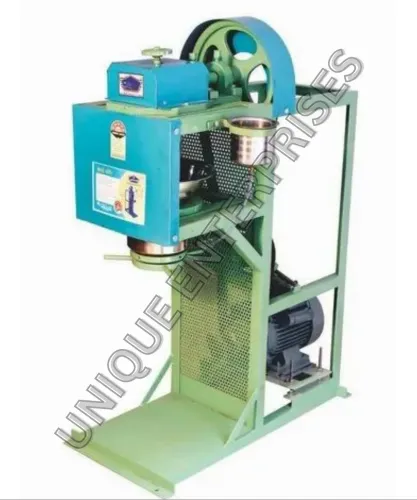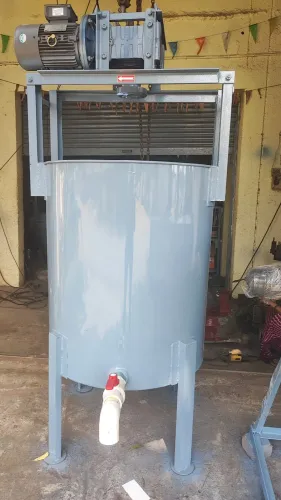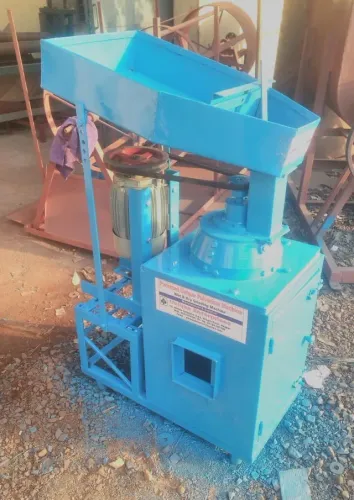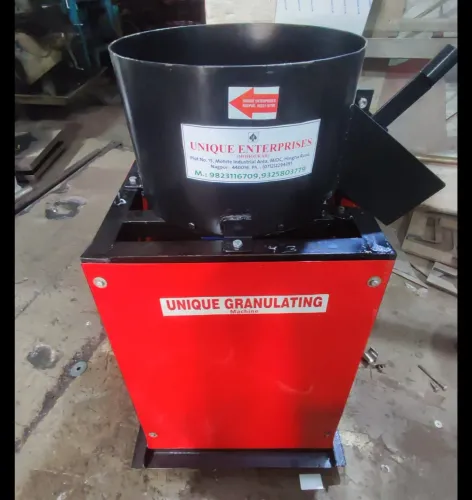
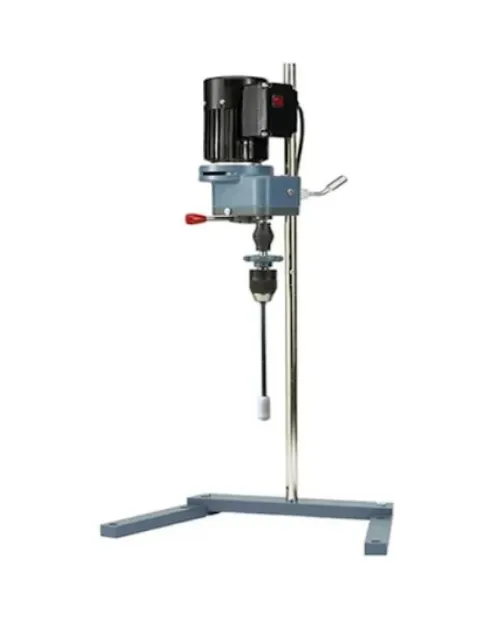
Product consistency is a major consideration in industries handling liquids, emulsions, and suspensions. When ingredients separate, particle distribution remains uneven, and batches behave differently during storage, manufacturers may need a more controlled processing method. A Homogenizer is designed to help create a more uniform product structure in suitable applications.
Food manufacturers, dairy processors, pharmaceutical companies, and selected chemical industries in Nagpur and Maharashtra can benefit from understanding what homogenization actually does before deciding whether the process is necessary.
What Happens During Homogenization
Homogenization reduces the size of dispersed particles and distributes them more evenly throughout a liquid medium.
In dairy processing, for example, reducing fat globule size can help limit cream separation. In other suitable products, homogenization may help improve dispersion and physical uniformity.
The exact mechanism depends on the type of equipment and application.
Homogenization should not be confused with ordinary mixing. A mixer primarily combines ingredients, while homogenization is typically used when finer particle distribution is required.
Where the Process Can Be Useful
Applications vary according to machine design and material characteristics. Homogenization may be relevant in manufacturing processes involving:
- Dairy products
- Beverages
- Sauces and selected food formulations
- Emulsions
- Pharmaceutical preparations
- Cosmetic formulations
- Selected chemical products
The required equipment parameters can differ considerably between these applications.
Product Characteristics Determine Machine Requirements
Viscosity is one of the first factors to consider. A low-viscosity liquid behaves differently from a thick formulation.
Particle characteristics, temperature, desired final texture, flow rate, and processing pressure may also influence machine selection.
Manufacturers should therefore avoid selecting equipment solely because another company uses a similar machine for a visually similar product.
Batch Consistency Has Commercial Value
Customers expect packaged products to remain reasonably consistent from one batch to the next.
Visible separation, uneven texture, and variable product behaviour can affect customer perception as well as downstream production.
A controlled homogenization process may contribute to improved repeatability when the formulation and equipment are appropriately matched.
However, machinery cannot compensate for uncontrolled formulation changes. Raw material quality, measurement accuracy, temperature management, and operating procedures remain important.
Hygiene Needs Attention
Food, dairy, and pharmaceutical processing place particular importance on cleanability.
Product-contact components should be considered as part of the facility's sanitation plan. Operators need practical access for cleaning according to the machine design and production requirements.
Where multiple formulations are processed using shared equipment, appropriate cleaning between batches becomes even more significant.
Evaluating Equipment With the Complete Process in Mind
Unique Enterprises in Nagpur works with manufacturers requiring food and industrial processing machinery for different production environments. Businesses considering a Homogenizer should be prepared to discuss the product being processed, viscosity, required throughput, operating conditions, and expected finished characteristics.
Manufacturers across Maharashtra may also need to evaluate how homogenization fits between upstream preparation and downstream filling, storage, cooling, packaging, and related processes.
Homogenization is most useful when there is a clearly defined processing objective. Instead of viewing the equipment simply as another machine in the production line, manufacturers should identify the exact product characteristic they want to improve and then determine the operating requirements needed to achieve it consistently.
Keywords