Material movement is an important part of any food processing operation. Flour, grains, spices, feed ingredients, besan, and other bulk materials often need to move between storage, grinding, mixing, and collection stages. When this movement depends heavily on manual handling, production can become labour-intensive and difficult to coordinate as volumes increase.
A Material Screw Conveyor provides a mechanical method of transferring suitable powdered and granular materials between processing stages. It can become an important supporting system in flour mills, spice processing units, feed plants, besan production facilities, and other agro-processing operations.
How a Material Screw Conveyor Works
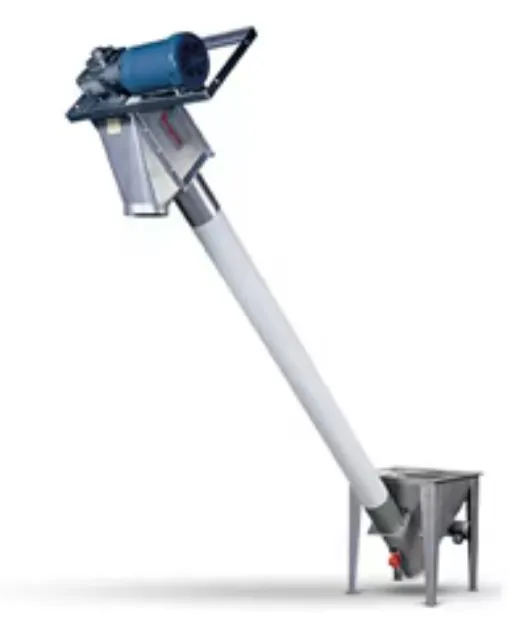
A screw conveyor generally consists of a rotating helical screw positioned within a tube or trough. Rotation of the screw moves material from the inlet towards the discharge point.
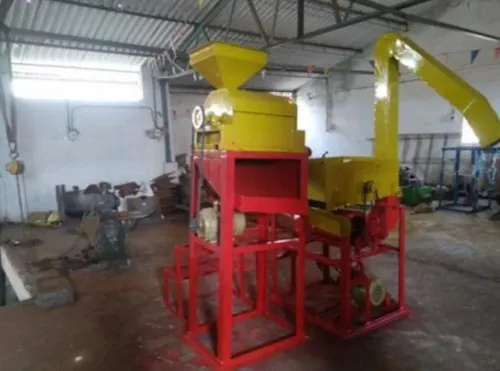
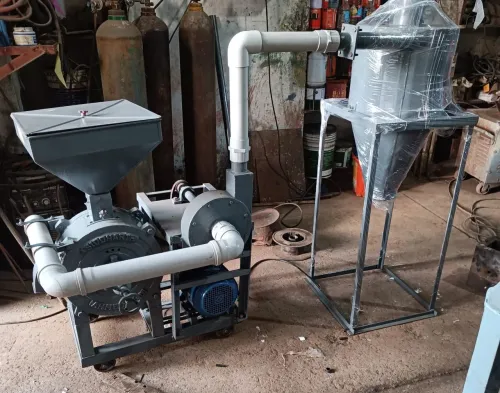
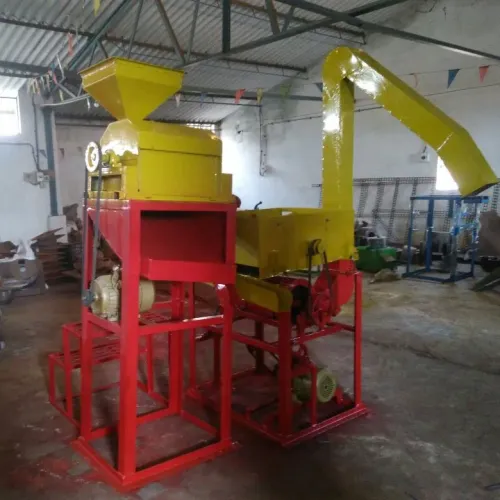
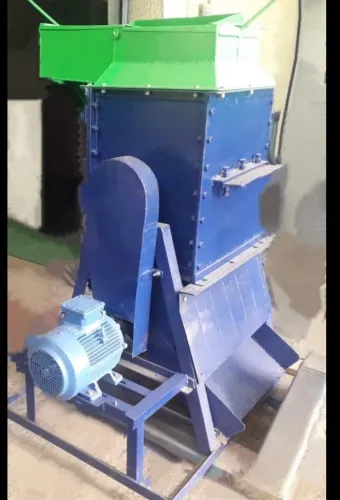
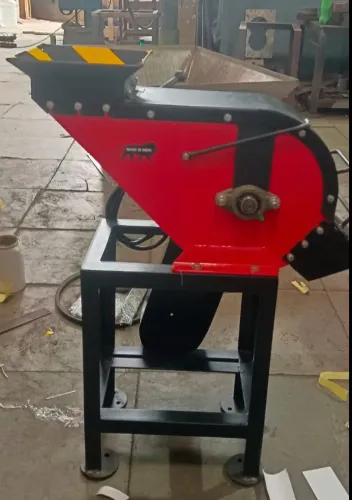
Depending on the plant layout and material characteristics, a conveyor can be used to connect processing equipment such as grinders, pulverizers, mixers, hoppers, and collection systems.
The objective is straightforward: maintain a controlled flow of material while reducing unnecessary manual transfer.
Material Handling Applications in Nagpur Food Processing Units
Nagpur and the wider Maharashtra region have a strong presence of flour mills, spice businesses, agro-processing units, feed manufacturers, and food production companies.
Material screw conveyors may support applications such as:
- Feeding grain into processing machinery
- Moving flour between production stages
- Transferring ground spices
- Feeding ingredients into industrial mixers
- Handling suitable cattle-feed ingredients
- Moving besan and other powders
- Connecting processing machinery with collection systems
The appropriate conveyor arrangement depends on the material and production process.
Why Material Characteristics Matter
Not every bulk material flows in the same way.
Flour behaves differently from whole grain, while spice powders may have different bulk density and flow properties from feed ingredients.
Important factors include particle size, moisture, bulk density, abrasiveness, and required conveying capacity.
Before selecting equipment, processors should determine the material being handled, required output per hour, conveying distance, inlet and discharge positions, and machines that need to be connected.
Reducing Manual Material Movement
Manual transfer may work in a small operation, but it can become increasingly inefficient as production grows.
Workers may need to lift bags, load machines repeatedly, and move processed material between different sections. This can interrupt workflow even when the primary processing equipment has sufficient capacity.
A properly selected screw conveyor can help establish a more organised material route through the plant.
Planning the Conveyor With the Production Line
Unique Enterprises in Nagpur manufactures food processing machinery and material-handling equipment for commercial applications.
When planning a conveyor, businesses should consider the entire production line rather than evaluating the conveyor independently.
Machine inlet heights, available floor space, cleaning access, discharge locations, operator movement, and future machinery additions can all influence the final configuration.
A Material Screw Conveyor works most effectively when it is selected around the actual material and production flow. By connecting suitable processing stages and reducing repeated manual handling, it can contribute to a more structured food processing operation.
Keywords