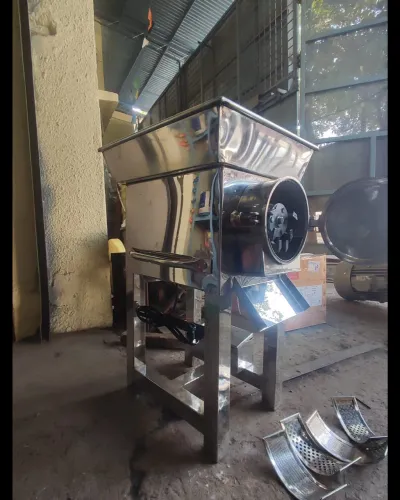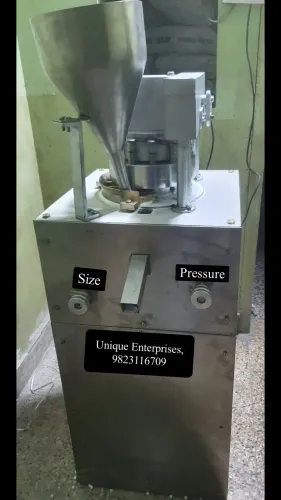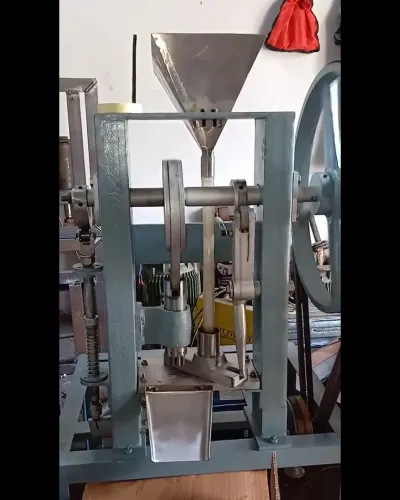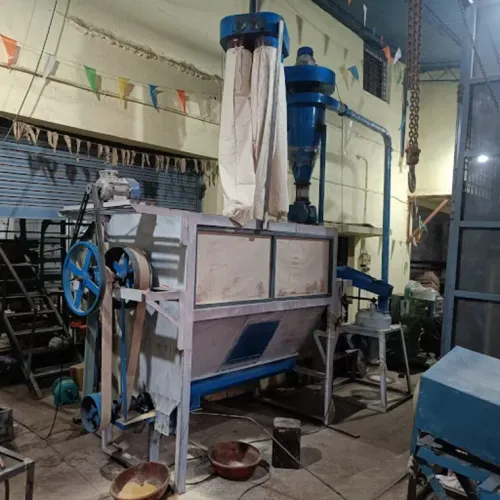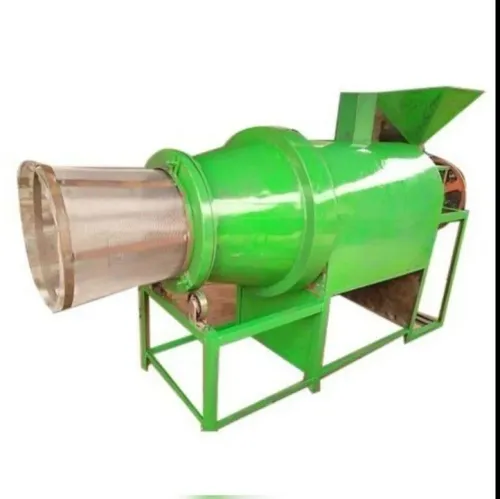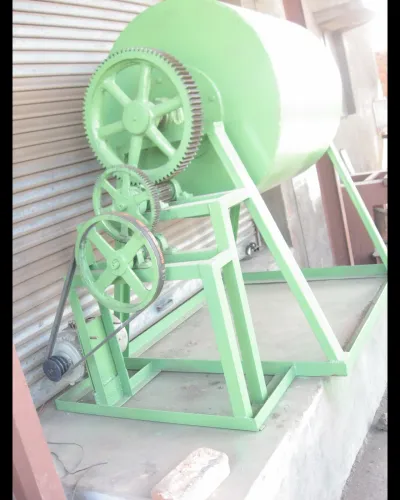
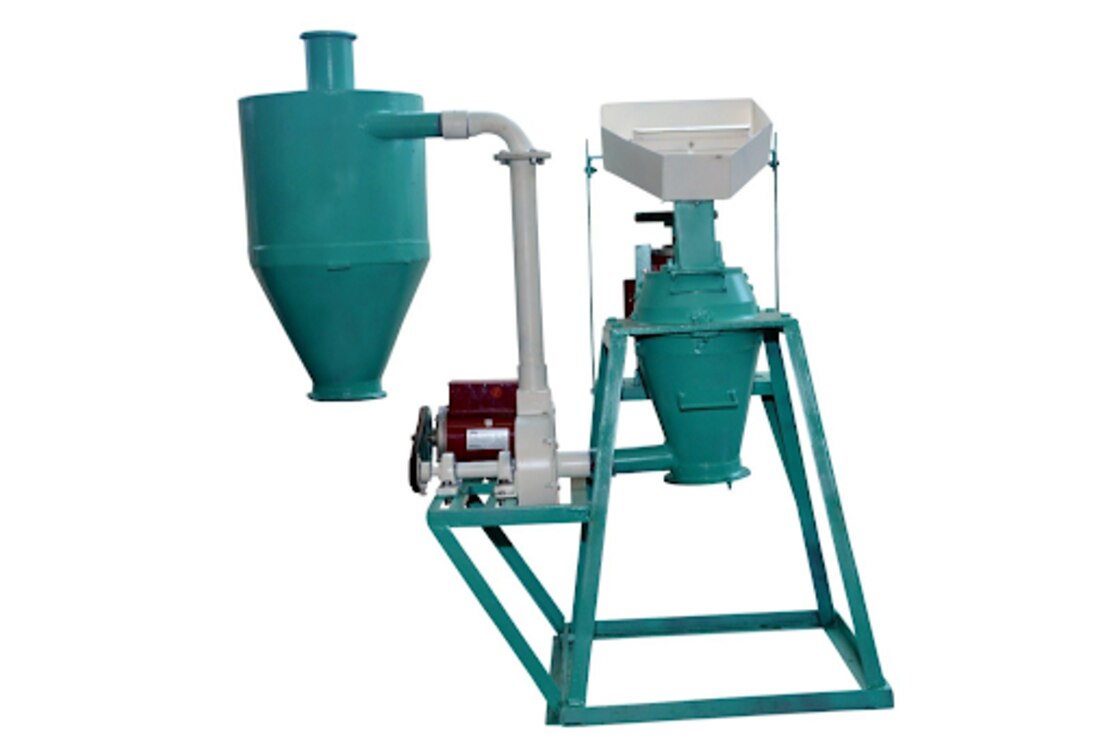
A chilli mill’s advertised kilograms per hour do not tell you how much saleable powder it will produce at your required fineness, temperature and moisture range. By defining the real output, product specification, raw-material condition and acceptance test first, you can compare machines on results rather than motor size or nominal capacity.
Key takeaways
- Divide saleable output by productive hours, not the daily target by machine rating.
- Specify powder fineness, temperature limit, colour retention and acceptable heat rise.
- Test whole dried chillies through feeding, grinding, cooling, sieving and packing.
- Request cleaning access, dust control, safety interlocks and documented trial results.
Convert Your Production Target Into Saleable Output
A 100 kg daily target does not mean you need a machine rated at 100 kg/hr. Calculate the productive hours left after loading time, cleaning time and expected stoppages, then divide the required saleable output by those hours.
If you need 500 kg per shift and have 6 productive hours, you need 83.3 kg/hr of saleable product before allowing for yield losses.
Use this checklist to convert the target:
- Record the shift length and subtract loading time, cleaning time, planned breaks and realistic stoppages.
- Define saleable output by specification, such as powder passing a 60-mesh sieve, not simply material discharged from the mill.
- Run a mass balance with weighed fresh feed, saleable product, oversize or recycle, collected dust and unexplained loss.
- Calculate saleable yield: saleable product ÷ fresh feed × 100. Divide the required saleable rate by this yield to estimate the necessary feed rate.
- Compare that feed rate with the machine’s rated capacity under the same chilli moisture, screen aperture, fineness and temperature limit.
Run the trial long enough for temperature and filter loading to stabilise. Record particle-size distribution, discharge temperature, electrical load and unplanned stoppages; a short no-load demonstration can hide clogging and overheating. If an air classifier recirculates material, demand separate figures for fresh-feed rate, internal recycle and final saleable output.
Define the Powder Before Comparing Grinding Mechanisms
Choose the grind specification before choosing the mill. Define coarse flakes, medium powder or fine powder by a measurable result: for example, the percentage passing 40 mesh, 60 mesh or 80 mesh, plus the maximum retained fraction. State the sieve method and sample preparation, because chilli agglomerates can distort a simple mesh check.
| Mechanism | Best match | Main trade-off |
|---|---|---|
| Hammer mill | Coarse flakes to medium powder; variable feed | Tolerates uneven feed, but produces a broader size distribution |
| Impact pulverizer | Medium powder to fine powder | Handles finer reduction, but heat and dust control become more important |
| Pin mill | Fine powder with a narrower distribution | Requires steady feeding and effective foreign-material control |
| Disc mill | Coarse flakes to medium powder | Simple size adjustment, but uniformity depends heavily on disc setting |
| Blade grinder | Small batches or rough chopping | Produces uneven particles and is unsuitable for a consistent 60 mesh or 80 mesh product |
Do not compare machines by motor kilowatts or an hourly figure alone. A hammer mill rated for coarse flakes is not equivalent to a pin mill rated at the same kg/h for fine powder. Ask for a trial using your chilli and record throughput, percentage passing the target sieve, discharge temperature and electrical load.
If the specification is 40 mesh, 60 mesh or 80 mesh, reject any quotation that uses only “fine” without a sieve result.
Account for Chilli Condition, Heat and Staged Grinding
Two chilli lots with the same weight can produce different saleable output. Higher moisture content makes pods tougher, increases energy use and encourages clogging; excessive dryness creates dust and rapid product-temperature rise. Large pods, incomplete stalk removal, high seed proportion and high oil content also change the mill’s resistance, fineness and heat load.
1. Inspect and condition the feed before comparing capacity. Remove stalks because they resist size reduction and can leave fibrous particles. Record moisture content, pod size, seed proportion and oil content for each lot. Feed consistently; surges overload the grinding chamber, while an empty chamber increases residence time and heating.
2. Use staged grinding for tough or oily chillies. Pre-breaking reduces the size entering the fine mill and lowers the impact load. A controlled feeding rate then limits clogging and prevents material from bridging above the inlet.
If the first pass leaves oversize particles, a second pass can improve fineness without forcing every particle through an aggressive single-stage cycle.
3. Set acceptance limits around quality, not motor size. Measure product temperature at discharge after the line reaches stable operation, then record particle-size distribution, throughput and stoppages. A finer screen can raise heat and reduce output, while excessive recirculation can darken the powder and drive off aroma.
Use air or jacket cooling when the permitted temperature rise is exceeded; choose cryogenic pre-cooling only when trials prove better colour, aroma retention or yield after its added cost and complexity.
Test Whole Dried Chillies on the Complete Process Line
Accept a proposed machine only after a witnessed trial using your whole dried chilli, not a short no-load demonstration. Run the complete line, including cleaning, feeding, grinding, screening, dust collection, conveying and regrinding, until temperature and filter loading stabilise.
1. Weigh the feed and record the lot’s moisture, pod size, seed proportion and stalk content. Note the screen aperture, feed opening and feed rate used during the trial.
2. Continue the run long enough to expose bridging, clogging, heating and unplanned stoppages. Record operating time, stoppage time, recycle rate and the mass of saleable powder, oversize, collected dust and unexplained loss.
3. Test the finished powder against the agreed particle-size distribution using the specified sieve method or laser diffraction. A screen aperture alone cannot prove compliance because irregular particles can pass through openings while oversize material remains in the mill.
4. Measure discharge temperature at regular intervals, along with motor current or electrical load. Record the dust collector’s pressure or equivalent indication of filter loading; a grinder that meets kilograms per hour while overheating powder or overloading filtration has failed the process test.
Approve the machine against written limits for saleable output, temperature, particle size, dust loss, recycle rate, electrical load and stoppages. Compare capacity figures only when feed condition, target fineness and operating conditions match; a coarse-grinding rating does not predict fine-powder output.
Use a Procurement Checklist That Covers Cleaning and Safety
Request a signed specification that covers the complete line, not only the mill. A grinder that reaches the stated kg/h but overloads the sieve, dust collector or feeder will not produce compliant saleable powder.
- Record rotor speed, motor rating, feeder type, feed-rate control and discharge arrangement. Ask for the maximum product-discharge temperature, measurement point and cooling method.
- Specify food-contact construction: product-contact grade, surface finish, weld quality, gasket material, drainability and the absence of ledges or dead pockets.
- Require magnetic separation details: magnet location and strength, inspection frequency, screen access and the procedure for isolating rejected material. Include these controls in your HACCP plan.
- Ask for routine cleaning time, tools required, retained product after emptying and changeover time. Request swab or residue-validation evidence if the line handles different spices.
- Confirm dust capture at the mill and discharge points, earthing and bonding, electrical-equipment suitability and the combustible dust risk assessment. For European installations, ask how Directive 2014/34/EU and workplace controls under Directive 1999/92/EC apply.
| Detail | Request from the supplier | Failure it prevents |
|---|---|---|
| Cleaning access | Tool-free or rapid chamber access, drainability and cleaning instructions | Long stoppages and cross-contamination |
| Safety evidence | Guarding, interlocks, emergency stop and earthing drawings | Contact, ignition and shock hazards |
| Line interfaces | Feeder, sieve, filter, conveyor and packing design limits | A bottleneck after the grinder |
Ask Unique Enterprises to state these values on the quotation, rather than accepting “industrial” or “easy to clean” as specifications.
Related products
 | Commercial Spice Grinder Machine Commercial Spice Grinder Machine Usage/Application Commercial Material SS/MS Brand Unique Enterprises Capacity More than 100 kg, 50 kg Type Fully Automatic, Semi-Automatic Phase 3... View product → |
 | Pulverizer Machine ₹69000 As our name suggests, we are new and unique kind of a designing company Manufacturing and Exporting Mawa and Khoya Making Machine, Ribbon & Conical... View product → |
Frequently asked questions
How do I calculate the required chilli grinder capacity?
Subtract loading, cleaning and expected stoppage time from the working day, then divide required saleable output by the remaining productive hours.
What should I define before comparing chilli grinding mechanisms?
Specify powder fineness, particle-size consistency, temperature limit, colour retention, throughput and whether you need sieving or recirculation.
Why should I test whole dried chillies on the complete process line?
A full trial reveals feeding problems, heat buildup, dust losses, sieve performance, yield and the actual saleable output.
What should a chilli grinding machine procurement checklist include?
Check cleaning access, contact materials, dust extraction, safety interlocks, spare parts, maintenance points and documented test results.