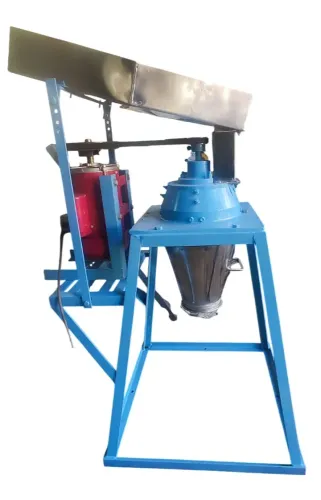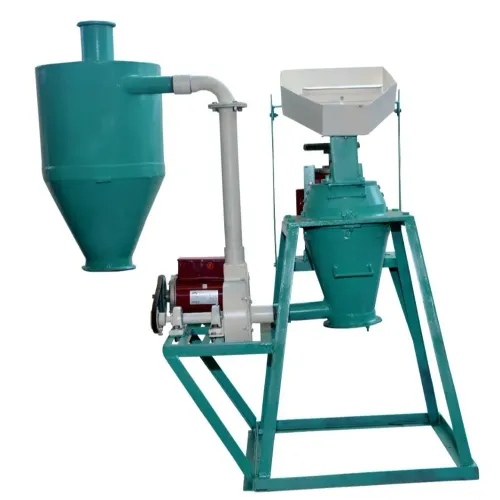
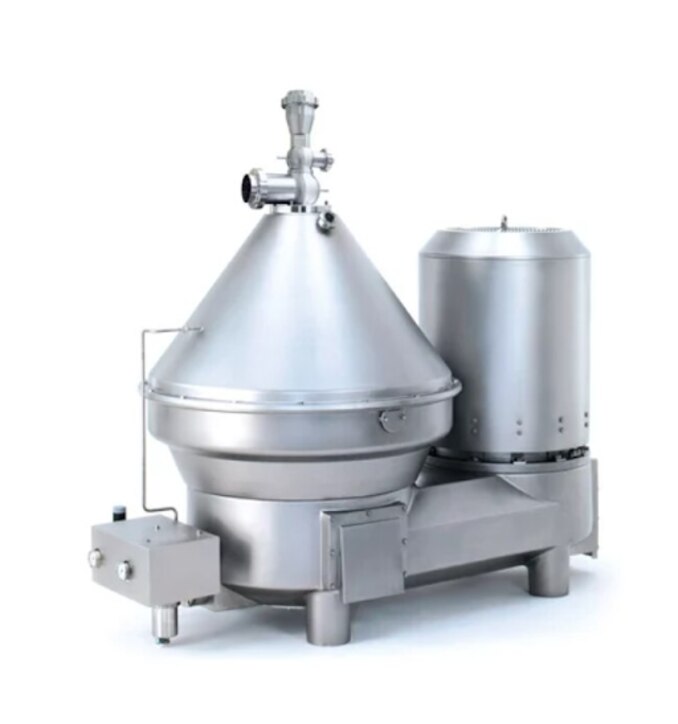
Choosing a separator is not just a matter of selecting the largest litres-per-hour figure. You need to match usable capacity to your milk schedule, confirm that the machine performs on your milk, and compare labour, cleaning, power and service requirements before accepting a quotation.
Key takeaways
- Calculate capacity from daily milk volume, operating hours and cleaning downtime.
- Test fat recovery separately on cow, buffalo and mixed milk.
- Compare manual, electric and continuous separators against labour and power limits.
- Ask for bowl capacity, motor rating, materials, warranty and service details in writing.
How centrifugal separation turns milk into cream and skim milk
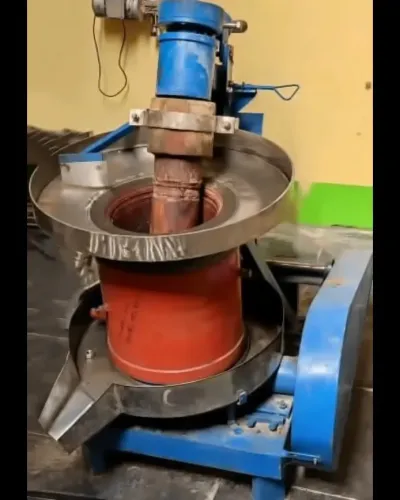
A dairy cream separator machine uses centrifugal force to split milk into cream and skim milk. In the rotating bowl, heavier skim milk moves outward while lighter cream moves inward through closely spaced discs. The two streams then leave through separate outlets.
1. Filter fresh milk before it enters the bowl. Remove sediment and visible particles, and control foam because air-filled milk disrupts stable outlet flow. High acidity, abnormal milk, partially churned milk and previously homogenized packaged milk can also reduce separation quality.
2. Feed warm, fluid milk for easier separation. Commercial separation commonly uses about 35–55 °C, but obtain the supplier’s confirmed feed-temperature range for the machine. Cold milk can reduce efficiency and throughput; excessive heating increases fouling and can affect product quality.
3. Match feed rate and speed to the bowl. Overfeeding reduces residence time and can increase fat loss in skim milk, while unstable rotational speed disturbs both outlet streams. Adjust cream concentration through the relative cream and skim outlets, using the outlet screw, valve or comparable control—not by changing speed alone.
4. Treat the output correctly: separation produces cream and skim milk, not a homogenized emulsion. If you need a stable, fine emulsion, add a separate homogenizer or a defined mixing step. Verify performance with your milk by weighing feed, cream and skim streams and testing fat in all three.
How to calculate usable cream separator capacity for your dairy
For a milk cream separator for small dairy in Nagpur, calculate usable cream separator capacity as:
Milk received during the planned separation window ÷ available operating hours
Then add margin for loading, startup, adjustment, bowl cleaning and short interruptions. Processing 1,000 litres in four hours requires 250 litres per hour before that margin, so a 125-litre-per-hour nameplate is inadequate.
| Rating | Daily-volume fit | Peak intake and cleaning downtime |
|---|---|---|
| 300 L/h | Around 1,000 L/day with a full four-hour window | Suits low peaks; cleaning can quickly remove the small reserve |
| 500 L/h | 1,000 L/day with a shorter window or more interruption | Handles moderate peaks and scheduled washing better |
| 800 L/h | Larger daily intake or a narrow receiving window | Gives stronger recovery from delays and bowl cleaning |
| 1,000 L/h | High intake concentrated into limited hours | Choose only when daily volume and peak flow justify the cost |
A rating alone does not prove usable output. Continuous throughput means milk enters and exits while the separator runs; batch capacity means the bowl handles a fixed quantity before stopping. A “200 L” reference can describe bowl volume or batch size, not 200 litres per hour.
Require the quotation to state:
- Effective or nominal throughput
- Continuous or batch operation
- Inlet temperature
- Expected milk-fat percentage
- Acceptable skim-milk fat loss
Compare those figures with your actual milk schedule, not the largest catalogue rating.
How to verify cream-fat recovery on cow, buffalo and mixed milk
Accept a commercial milk cream separator in Nagpur only after a mass-balance trial using your own milk type. Cow, buffalo and mixed milk start with different fat levels, so one outlet setting will not deliver the same cream volume or cream-fat percentage.
| Milk type | What changes | Acceptance implication |
|---|---|---|
| Cow milk | Lower starting fat than buffalo milk | Do not compare cream volume with buffalo-milk results |
| Buffalo milk | Higher starting fat and richer cream potential | Check cream concentration and skim-milk fat separately |
| Mixed milk | Fat varies with the blend ratio | Record the exact blend used for the trial |
Run the trial at the agreed feed temperature, rate, bowl speed and outlet adjustment. Weigh the milk feed, cream stream and skim stream separately, then test fat in all three. Calculate cream-fat recovery as fat leaving in cream divided by fat entering in feed; compare it and skim-milk fat loss with the agreed limits.
Cream fat alone can hide excessive fat in skim milk or an unaccounted product loss.
Record the milk-fat percentage, cream-fat percentage, skim-milk fat percentage, feed temperature, feed rate, bowl speed and outlet-screw or valve position. Reject a demonstration using cold, high-acidity, abnormal, foamy, sediment-heavy or partially churned milk unless those conditions match your operation. Previously homogenized packaged milk can separate poorly and is not a substitute for farm-milk validation.
Clarification or straining removes large particles; it does not replace hygienic milking, rapid cooling, acidity control or microbiological testing. Sediment reaching the bowl increases cleaning and can destabilise recovery.
Which separator format fits your labour, cleaning and power constraints?
A manual separator fits intermittent, low-volume work, but it demands physical effort and produces less consistent speed. An electric dairy cream separator machine reduces labour; single-phase suits a small premises, while three-phase supports longer commercial duty when the required connection is available.
| Option | Best fit | Main trade-off |
|---|---|---|
| Manual | Irregular, low-volume batches | Labour and variable speed |
| Single-phase electric | Small dairy with intermittent intake | Lower installation complexity |
| Three-phase electric | Steady, extended commercial duty | Requires suitable supply and installation |
| Semi-automatic | Reduced feeding or outlet intervention | More controls and maintenance |
| Fully automatic | Consistent output with minimal labour | Higher purchase and service cost |
| Batch separator | Irregular milk arrival | Waiting between batches |
| Continuous separator | Steady receiving and processing | Needs a reliable feeding routine |
Do not equate a household separator with commercial equipment. Compare duty cycle, serviceability and food-contact construction; a household model may overheat or wear out on a dairy schedule. Outsourcing avoids ownership and cleaning, but adds transport, scheduling, product handling and dependence on another dairy.
Include bowl sludge in the cleaning decision. Ask whether the bowl is manually dismantled or self-cleaning, then obtain written instructions for detergent concentration, water temperature, rinsing, sanitising, drying and the maximum time before cleaning. Also request the stainless grade, elastomer type, weld finish, hygienic joints and spare discs, seals and bearings.
The quoted cream separator capacity is useful only if the machine can complete this routine within your operating window.
What to demand in a Nagpur supplier quotation before ordering
Do not accept a catalogue rating as proof of suitability. Ask Unique Enterprises, or any competing supplier, to state these terms in writing for a milk cream separator for small dairy in Nagpur.
| Requirement | What the quotation must state |
|---|---|
| Capacity | Effective litres per hour, not bowl volume; batch or continuous operation |
| Milk conditions | Feed-temperature range and test results for cow, buffalo or mixed milk |
| Separation result | Cream-fat recovery and maximum skim-milk fat loss |
| Cleaning | Manual or self-cleaning method, detergent procedure and bowl-disassembly time |
| Electrical supply | Voltage, phase, frequency, motor rating, enclosure protection and starting current |
| Support | Parts list, service intervals and local response arrangements |
Compare the electrical figures with your actual single-phase or three-phase connection. A phase or voltage mismatch can stop commissioning even when the mechanical capacity fits.
Require a commissioning trial using weighed feed, cream and skim streams. Demand laboratory or calibrated milk-testing results for fat in all three streams, then record the agreed throughput, recovery and skim-milk loss.
Confirm availability and lead times for bowl discs, gaskets, bearings, motor components and outlet seals. A polished exterior proves neither hygienic design nor lifecycle value; cleaning time, food-contact construction and spare-part access matter more.
For a commercial milk cream separator in Nagpur, choose the machine whose usable throughput, recovery results, cleaning routine, power connection and local support match your operating window—not the highest catalogue rating. Ensure the quotation names the service schedule and cleaning limit before you place the order.
Related product
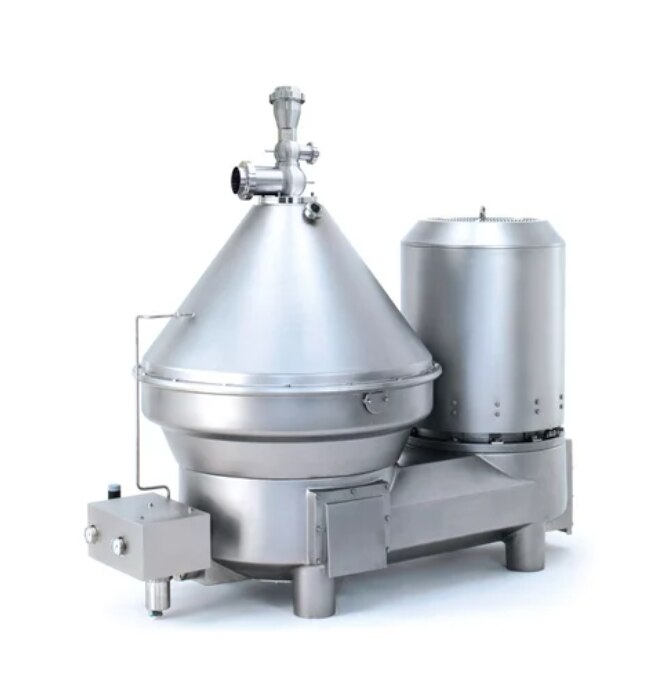 | Milk Cream Separator Minimum Order Quantity 1 Unit Type Milk Cream Separator Tank Capacity 300-1000 Liters/Hr Brand Unique Enterprises Usage/Application Commercial... View product → |
Frequently asked questions
How does a centrifugal milk cream separator produce cream and skim milk?
A rotating bowl spins milk through closely spaced discs. Heavier skim milk moves outward, while lighter cream moves inward; separate outlets discharge both streams.
How do you calculate usable cream separator capacity for a small dairy?
Divide your daily milk volume by planned operating hours, then allow time for filling, cleaning, changeovers and interruptions. Compare that usable rate with the supplier’s stated capacity.
How can you verify cream-fat recovery on cow, buffalo and mixed milk?
Run separate samples of cow, buffalo and mixed milk under the same operating conditions. Test the feed, cream and skim-milk fat content, and record temperature, flow rate and separator settings.
Which cream separator format suits limited labour, cleaning time or power?
Choose a manual model when batches are small and electricity is unreliable, an electric batch model when labour is limited, or a continuous system when daily volume justifies faster processing and more cleaning work.
What should a Nagpur supplier include in a cream separator quotation?
Request rated and usable capacity, motor power, bowl and contact-material specifications, cream-adjustment range, power requirements, cleaning instructions, spare-parts list, warranty, installation scope and local service terms.
Keywords