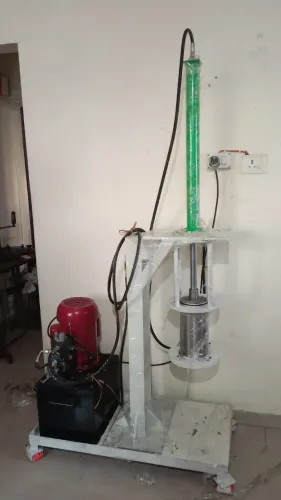
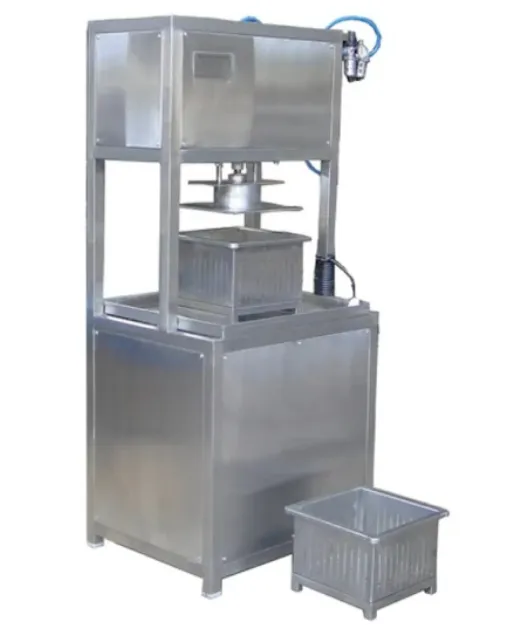
Paneer manufacturing may appear straightforward, but maintaining the same texture, moisture level, shape, and firmness across every batch can become difficult when production volumes increase. One of the important pieces of equipment used to bring greater control to this stage is a Paneer Press.
For dairy businesses, commercial kitchens, food manufacturers, and paneer production units in Nagpur and other parts of Maharashtra, understanding how pressing affects the finished product can help improve production planning and product consistency.
Why Pressing Matters in Paneer Production
After milk is coagulated and the whey is separated, the curd contains considerable moisture. Pressing helps remove excess whey while bringing the curd particles together into a compact block.
The amount and uniformity of pressure can influence several characteristics of finished paneer, including:
- Moisture content
- Firmness
- Block shape
- Cutting quality
- Product consistency
- Handling during packaging
- Suitability for further food processing
Insufficient pressing can leave paneer excessively soft and difficult to cut. Excessive pressure may produce a denser texture than required. This makes controlled pressing important for businesses aiming to maintain defined product specifications.
Moving Beyond Manual Pressing
Small-scale paneer preparation often relies on weights and manually arranged pressing systems. This may work when only limited quantities are produced, but the method becomes difficult to standardize as output increases.
Commercial equipment provides a more structured production process. Depending on the machine configuration, several paneer moulds may be handled within a planned pressing cycle.
This can reduce variation caused by manually changing weights, uneven placement, and inconsistent pressing durations.
What Food Manufacturers Should Evaluate
Selecting pressing equipment should begin with the required finished product rather than machine capacity alone.
Manufacturers should consider:
- Expected paneer production per batch
- Desired block dimensions
- Required firmness and moisture level
- Available production space
- Cleaning requirements
- Mould configuration
- Frequency of production
- Integration with existing dairy processing activities
A machine suited to a small dairy outlet may not be appropriate for a larger food processing operation supplying restaurants, distributors, institutional kitchens, and retail channels.
Hygiene Is Equally Important
Any machinery coming into contact with food needs to support practical cleaning and sanitation procedures.
Food-contact surfaces, moulds, drainage arrangements, and surrounding machine areas should be accessible for routine cleaning. The equipment design should also fit the hygiene procedures followed at the facility.
For manufacturers in Maharashtra supplying paneer to commercial customers, maintaining documented cleaning practices can become increasingly important as production volumes and distribution networks expand.
Consistency Can Improve Downstream Operations
Pressing is not an isolated production activity. Better consistency at this stage can make subsequent processes easier.
Uniform paneer blocks can support predictable cutting, weighing, portioning, packaging, and storage. When blocks differ substantially in moisture and dimensions, additional handling may be required before packaging.
For businesses selling standardized pack sizes, this production consistency can be particularly valuable.
Planning Equipment Around Actual Production Needs
Unique Enterprises in Nagpur works with food processing businesses requiring machinery suited to different manufacturing capacities and processing requirements. When evaluating a paneer pressing setup, businesses should clearly communicate their batch size, desired block dimensions, operating pattern, and available workspace.
The right equipment should support the production process rather than forcing the production process to adapt unnecessarily around the machine.
A Paneer Press becomes especially useful when a dairy business moves from small manual batches toward structured commercial production. By focusing on controlled pressing, hygienic handling, practical capacity, and compatibility with existing operations, manufacturers can build a more repeatable paneer production process.
Keywords