A litre rating alone cannot tell you whether a mawa machine will meet your dairy’s daily requirement: the figure may describe milk input, vessel volume or finished khoya output. By defining yield, batch time, working volume, utilities and cleaning time, you can select a machine size that produces saleable mawa rather than buying capacity that remains unused.
Key takeaways
- Size the machine from milk input, yield and cleaning time—not quoted vessel litres alone.
- Calculate khoya machine capacity from usable milk volume and your measured milk-to-khoya yield.
- Measure doorway, drainage, electrical supply, water access and cooling space before ordering.
- Compare batch and continuous machines using saleable output per working day.
Match Machine Size to Milk Input and Finished Khoya Output
Choose a small, medium or large machine by matching milk input per batch with saleable khoya output, not by the litre figure on the quotation. The right mawa making machine size for dairy in Nagpur must also fit your batch cycle, cleaning time and cooling arrangement.
| Size | Milk input per batch | Indicative finished khoya output | Best fit |
|---|---|---|---|
| Small | Up to 100 L | About 18–25 kg | Sweet shops and small dairies |
| Medium | 100–300 L | About 18–25 kg per 100 L | Growing dairies and institutional kitchens |
| Large | Above 300 L | Output validated from your milk yield | Central dairy and high-volume production |
Treat these bands as comparison points, not purchasing specifications. Milk solids, target moisture and evaporation losses change the result; khoa must not exceed 30% moisture and must contain at least 30% milk fat on a dry-matter basis.
Compare khoya machine capacity using finished kilograms per hour after loading, heating, evaporation, scraping, discharge and cleaning. A 200-L machine completing one batch in two hours processes about 100 L per hour, while its finished output may be only 36–52 kg per hour. That is not a 200-kg-per-hour machine.
Ask each supplier for milk input, validated finished output, complete batch time and cleaning time in writing. Also specify the discharge temperature, cooling method and packing interval: producing more hot khoya without rapid hygienic cooling can reduce saleable output and raise contamination risk.
Calculate Khoya Machine Capacity from Milk Supply and Yield
Start with finished khoya demand, not the machine’s advertised litre rating. Required finished output per hour equals your daily target divided by productive hours, excluding loading, heating, evaporation, discharge and cleaning.
Use this calculation:
- Daily finished target ÷ productive hours = required khoya kg/h.
- Required khoya kg/h ÷ validated yield fraction = required milk input kg/h.
- Required daily milk input ÷ batches per day = milk input per batch.
- Add a 10–15% production buffer for peak orders, yield variation and unavoidable stoppages.
For example, 300 kg of khoya made in 10 productive hours requires 30 kg/h. At a validated 20% yield, the mawa production machine must process 150 kg of milk per hour. If it runs two-hour batches, specify at least 300 kg of milk input per batch, then confirm that the working volume permits this load.
Yield must come from your actual milk. Near 30% final moisture, 100 kg of cow milk may produce about 18–20 kg of khoa, while buffalo milk may produce about 23–26 kg. Fat, total solids, adulteration, scorching and the required texture change the result, so test a representative supply before fixing khoya machine capacity.
A 200-L unit completing one batch every two hours processes about 100 L/h, not 200 kg/h. Its finished output may be only 36–52 kg per batch. Record both milk input per batch and finished kg per batch, then subtract cleaning time from the daily schedule.
Sticky deposits that delay washing can reduce real output below the calculated figure.
Check Working Volume, Dimensions and Nagpur Site Utilities
Measure the room before approving a mawa making machine size for dairy in Nagpur. Record door width, ceiling height, floor strength, drain position and the route from unloading point to production area; a machine that fits the floor plan can still be impossible to bring through the doorway.
1. Ask for usable working volume, not only vessel capacity. A nominal 100-, 200- or 500-litre pan needs headspace for foaming, agitation and loading. Confirm the manufacturer’s maximum milk load, pan diameter, overall length, width, height, loading height and discharge clearance.
2. Mark service space around the machine. Leave room to open electrical panels, inspect the drive, connect steam or gas, wash the pan and position containers beneath the outlet. Check transport weight, lifting points and whether the floor can support the filled machine.
3. Match heating to the site utility. An electric unit needs its connected load, voltage, phase, isolator and cable size confirmed by an electrician; do not assume a three-phase supply is available. A steam-jacketed unit needs boiler output, operating pressure, pressure controls, steam piping, condensate return and approved installation.
A gas-fired unit needs the specified gas pressure, shut-off valves, ventilation, combustion protection and safe separation between flame and product.
4. Confirm the complete operating cycle for the commercial mawa machine in Nagpur: loading, heating, evaporation, scraping, discharge, cooling and cleaning. Obtain the discharge temperature, cooling method and packing interval, because extra hot khoya is not saleable capacity if it waits in an open container.
Compare Batch and Continuous Operation by Real Daily Output
Choose batch operation for most sweet shops and institutional kitchens; choose continuous operation only when milk supply, demand and downstream packing remain steady throughout the shift. A mawa production machine rated at 200 L does not produce 200 kg of khoya.
If one batch takes two hours and yields 36–52 kg, its real output is 18–26 kg per hour before cleaning.
| Format | Real output basis | Best fit | Main limitation |
|---|---|---|---|
| Batch | Milk per batch ÷ completed cycle time, including loading, evaporation, discharge and cleaning | Sweet shop or institutional kitchen making several recipes | Output falls when batches are small, delayed or difficult to clean |
| Batch, larger vessel | Higher milk input per cycle and 18–25% finished yield, subject to milk solids and target moisture | Dairy processor with predictable daily orders | More hot product waits for cooling and packing after discharge |
| Continuous | Finished khoya per hour with defined feed rate, residence time and cooling capacity | High-volume production line running one product | Poor fit for variable demand, recipe changes or frequent stoppages |
For a commercial mawa machine in Nagpur, calculate finished kg per hour as the daily target divided by planned production hours, then allow time for hot-water cleaning and inspection. A 100 L batch yielding 18–25 kg can suit a shop producing fresh batches, but not a line requiring uninterrupted dispatch.
Continuous equipment only increases saleable output when cooling, hygienic transfer and packing keep pace; otherwise hot khoya accumulates, loses quality and raises microbial risk. Specify an accessible, fully drainable product path with stainless-steel food-contact surfaces and a defined discharge temperature.
Use a Total-Cost and Supplier Checklist Before Purchase
A quotation is usable only when it states milk input, finished khoya output, cycle time and all site costs on the same basis. A “100-litre” claim is incomplete: depending on milk solids, target moisture and losses, it may produce about 18–25 kg of mawa per batch.
1. Ask the supplier to state working volume, maximum loading, expected finished kilograms, target moisture and output per hour after loading, heating, evaporation, scraping, discharge and cleaning. Confirm whether the khoya machine capacity refers to litres of milk or kilograms of product.
2. Price the complete installation, not just the vessel. Add freight to Nagpur, unloading, electrical cabling, control panels, boiler and steam lines, gas ventilation, water, drainage, cooling, packing and operator training.
3. Match the quotation to your utility. Electric equipment needs confirmed connected load and three-phase supply; steam equipment needs boiler capacity, pressure controls and condensate handling; gas equipment needs ventilation, combustion safeguards and flame separation from the product.
4. Inspect the hygiene specification: SS 304 food-contact surfaces, sanitary welds, a fully drainable product path and no exposed lubricant or painted contact area. Request SS 316 if chloride-rich water or aggressive cleaning chemicals create corrosion risk.
5. Require the discharge temperature, cooling method, packing interval and cleaning procedure in writing. Hot, slow-cooled mawa can lose quality and create microbial risk even when the nominal batch size looks adequate.
6. Confirm warranty coverage, spare-part availability, response time, preventive-maintenance tasks and replacement costs. Ask Unique Enterprises to separate machine price, commissioning and optional accessories so competing quotations can be compared fairly.
Related products
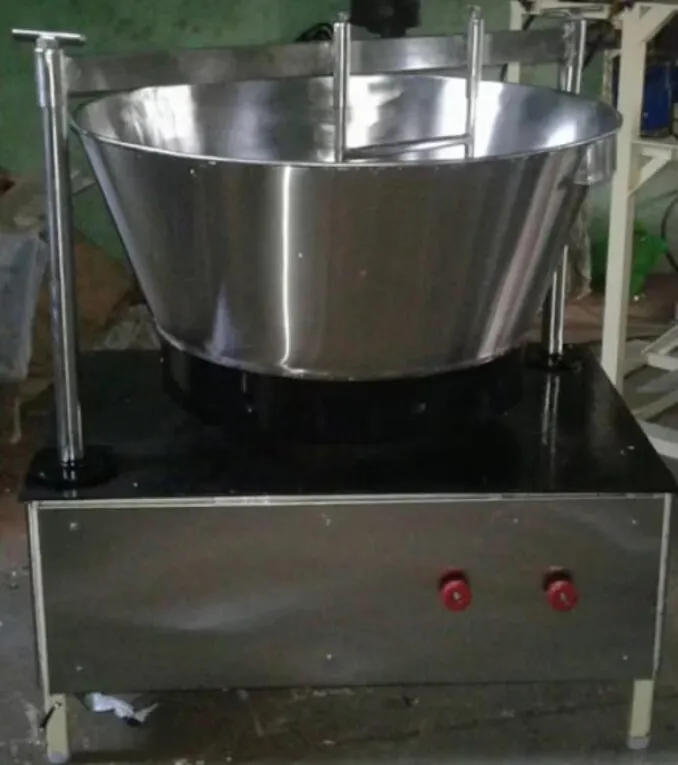
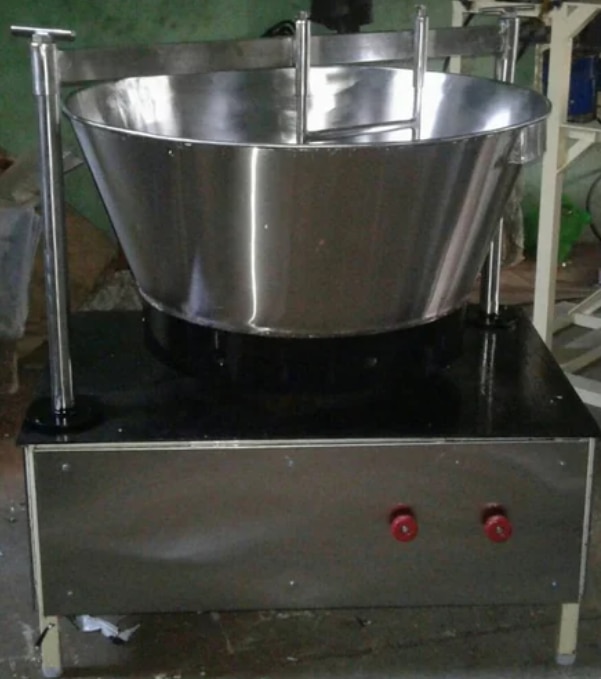 | Mawa and Khoya Making Machine Minimum Order Quantity 1 Unit Machine Body Material SS Equipment Type Mawa Making Machine Usage/Application Commercial Brand Unique Enterprises... View product → |
 | Flour Mill Capacity 30 kg/hr Motor Power 3 HP Stone Size 14 inch Material of Construction Mild Steel Electricity Connection Single Phase As our name suggests,... View product → |
Frequently asked questions
How do I choose a mawa making machine size for dairy in Nagpur?
Match usable milk input per batch to your required khoya output, then check batch time, cleaning time, cooling space and available utilities. A machine that fits the milk volume but delays dispatch is undersized for the operation.
How do I calculate khoya machine capacity from milk supply?
Divide the milk available for processing by the number of planned batches to find required input per batch. Estimate finished khoya by multiplying milk input by your measured milk-to-khoya yield, then allow for production losses and saleable-output requirements.
What site details should I check before buying a commercial mawa machine in Nagpur?
Measure the entrance, floor area, ceiling height and route for installation. Confirm electrical phase and load, water supply, floor drainage, ventilation, cleaning access and room for cooling, packing and material movement.
When is batch operation better than continuous mawa production?
Choose batch processing when milk supply varies, recipes change or you need simple changeovers. Consider continuous operation when daily milk volume is steady and higher throughput justifies a more demanding cleaning, control and maintenance routine.
Keywords